We’ve all been there. It’s 1:00 AM, and you’re staring at a screen where a CGI toilet is singing a remix of a pop song while a Minecraft parkour video plays simultaneously underneath it. You don’t know why you’re watching it. You don’t even particularly like it. But ten minutes have turned into two hours, and your head feels like it’s been stuffed with damp cotton wool.
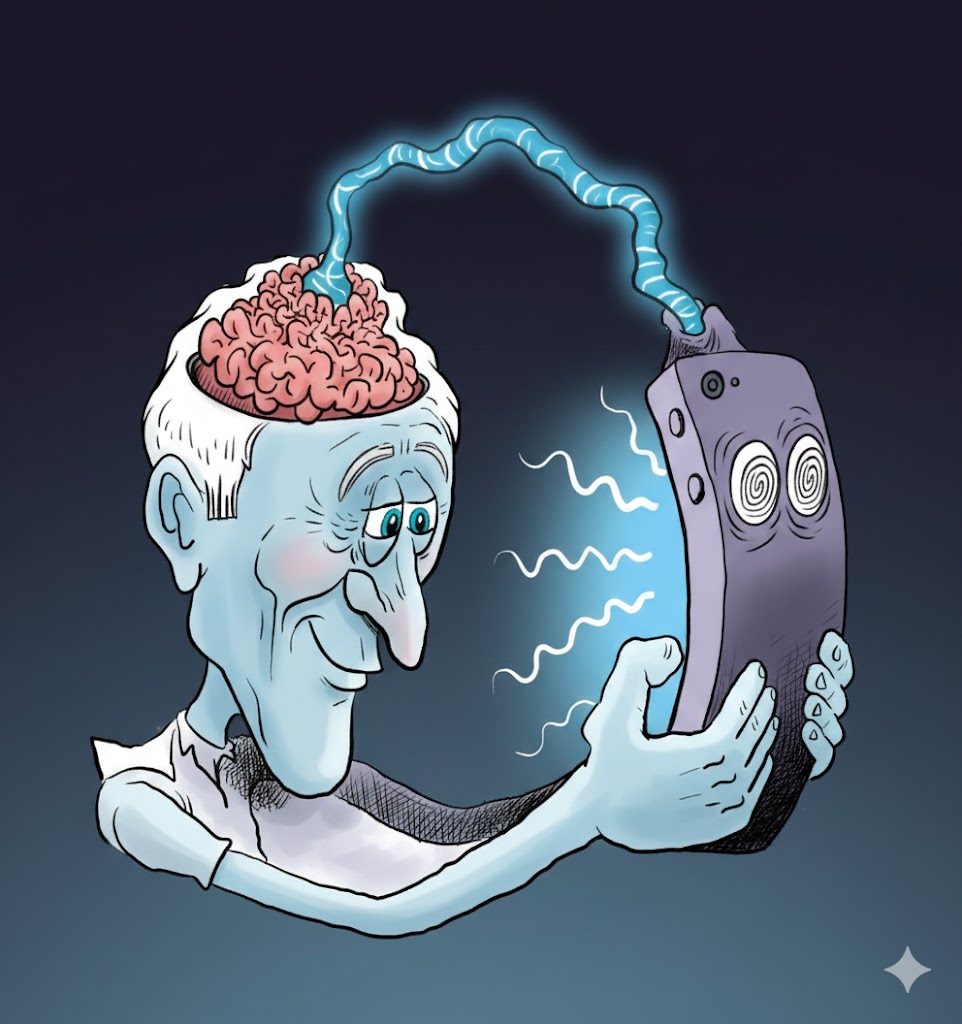
Welcome to the era of brainrot. While the term started as a self-deprecating internet meme, it describes a very real psychological phenomenon: the cognitive fog and shortened attention span resulting from the hyper-consumption of low-effort, high-stimulus digital content.
But how does this actually happen? It’s not an overnight collapse; it’s a systematic “hijacking” of your brain’s reward circuitry.
The Dopamine Slot Machine
At the heart of the brainrot phenomenon is dopamine. Contrary to popular belief, dopamine isn’t just about pleasure; it’s about anticipation.
Short-form video platforms like TikTok, Instagram Reels, and YouTube Shorts are essentially high-speed slot machines. Every time you swipe, you are performing a “micro-gamble.” Will the next video be a hilarious skit, a life-changing recipe, or a nonsensical meme? Because you don’t know, your brain stays in a state of high alert.
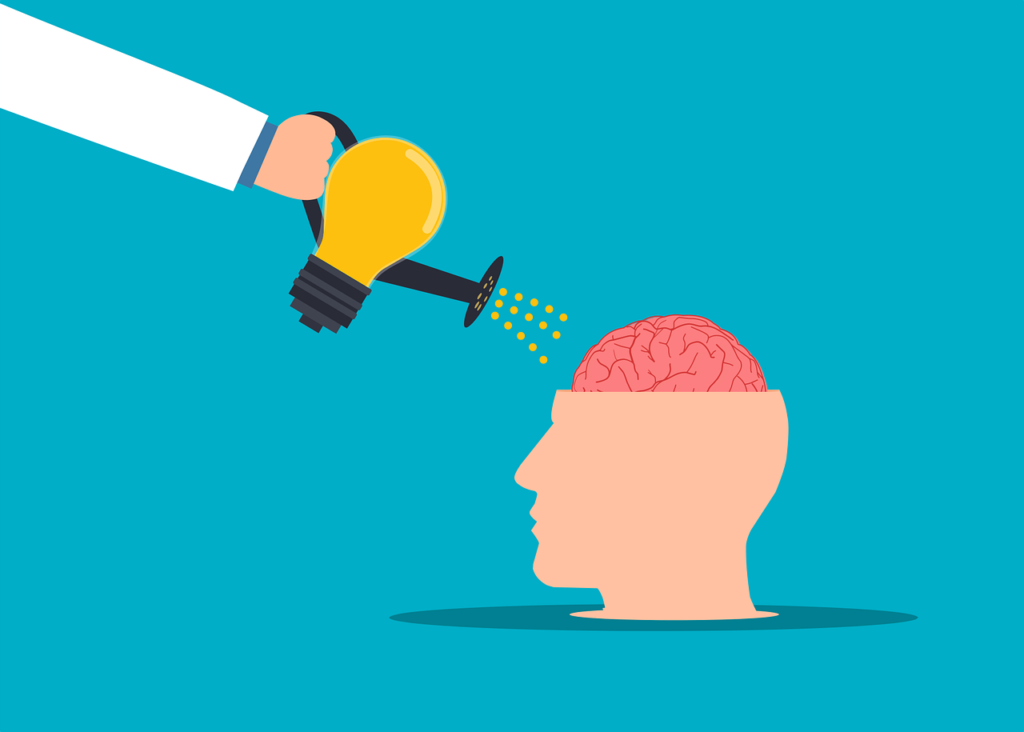
When you hit a “win” (a video you enjoy), your brain releases a surge of dopamine. The problem? These videos are only 15 to 60 seconds long. This creates a feedback loop where the reward is frequent but fleeting. Eventually, your brain’s baseline for stimulation rises. Standard activities—like reading a book or having a conversation—start to feel agonizingly slow because they don’t offer a “hit” every thirty seconds.
Sensory Overload and “Sludge Content”
One of the hallmarks of brainrot is Sludge Content. This is the practice of splitting a screen into multiple sections: the top might be a clip from a cartoon, the middle is a person reacting, and the bottom is “satisfying” footage of someone cutting kinetic sand or playing a mobile game.
This is a deliberate tactic to bypass your brain’s “boredom” filters. By overstimulating your visual and auditory senses, these videos prevent your mind from wandering. Your focus is so fragmented across the different zones of the screen that you enter a “trance-like” state.
In this state, your Prefrontal Cortex—the part of the brain responsible for critical thinking, impulse control, and decision-making—effectively goes offline. You stop asking, “Is this useful?” and simply settle into a passive mode of consumption. You aren’t “watching” the content so much as you are letting it wash over you.
The Erosion of Narrative Focus
Human beings are wired for stories. Historically, we processed information through long-form narratives with a beginning, middle, and end. This requires “deep work” from the brain—remembering characters, understanding cause and effect, and anticipating long-term resolutions.
Brainrot content strips away the narrative. It focuses on “The Hook” and “The Payoff” with no substance in between. When we spend hours a day in this environment, our neuroplasticity—the brain’s ability to rewire itself—works against us.
We essentially “train” our brains to expect immediate resolution. This leads to a decreased ability to handle complexity. If a problem can’t be explained in a catchy caption or a 10-second soundbite, a brain accustomed to “rot” will often tune out. This isn’t just about being “lazy”; it’s about the neural pathways for sustained attention becoming weak from disuse.
Memetic Language and Social Mimicry
Brainrot isn’t just what we see; it’s how we speak. Terms like “skibidi,” “rizz,” “gyatt,” and “ohio” (often used devoid of their original context) represent a shift toward memetic shorthand.
While every generation has its slang, brainrot language moves at the speed of light. It relies on “in-group” recognition rather than actual communication. When the brain adopts these linguistic shortcuts, it prioritizes social mimicry over original thought. We begin to think in memes. This creates a “flattening” of the internal monologue, where complex emotions or observations are boiled down to the latest viral phrase.
Reclaiming the Gray Matter
The good news? Brainrot isn’t permanent. The same neuroplasticity that allowed your attention span to shrink can also help it expand. The “cure” isn’t necessarily a total digital detox (which is often unrealistic), but rather a reintroduction of friction.
- Practice Monotasking: Force yourself to do one thing at a time. Watch a full-length movie without checking your phone. Read five pages of a physical book.
- The “Why” Check: Before opening a scrolling app, ask yourself: “Am I looking for something, or am I just avoiding boredom?”
- Curate the Feed: Unfollow accounts that use “sludge” tactics. Seek out content that requires you to think or learn a skill.
The goal isn’t to live in a cave, but to ensure that you are the one driving your brain, rather than letting an algorithm sit in the driver’s seat. After all, your attention is the most valuable resource you own—don’t let it rot for the sake of a singing toilet.